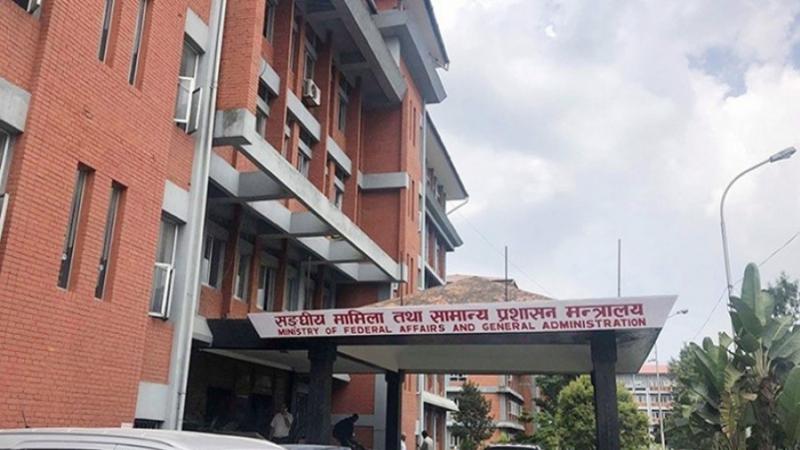
May 01, Kathmandu - The Ministry of Federal Affairs and General Administration is currently reviewing suggestions received on draft standards aimed at resolving longstanding boundary issues among local government units in Nepal. These guidelines are designed to address the challenges faced by citizens due to inconsistent boundary demarcations and to streamline the legal framework for boundary reorganization.
Due to discrepancies between recommended boundaries and actual geographic delineations, citizens have experienced difficulties and voiced complaints. In response, the ministry prepared a draft set of standards and sought public input to facilitate a policy-based solution through legislation.
Deputy Secretary Deepak Dhakal stated that the ministry is studying feedback from local levels, including discussions with officials from the Village and Municipality Associations, to finalize the draft standards. The ministry had previously called for suggestions to refine the standards.
Additionally, discussions are underway about re-evaluating the current classification of municipalities and metropolitan cities, especially considering the potential merger of some local units into larger municipalities. The draft standards incorporate various stages of consultation to accommodate such restructuring.
The Local Level Operation Act permits boundary adjustments and mergers between neighboring local units, and proposals for relocating local government centers have also emerged. Since the 2017 restructuring that established 753 local units, local governments have been working closely with citizens to improve service delivery.
Nepal currently has one federal government, seven provincial governments, and 753 local governments—including six metropolitan cities, eleven sub-metropolitan cities, 276 municipalities, 460 rural municipalities, and over 6,700 wards.
Historically, boundary and name changes were decided based on recommendations from local task forces, provincial authorities, and central-level commissions. While initial boundary demarcations were approximate, practical adjustments on the ground have led to some boundary and geographic modifications.
Feedback from citizens indicates requests for increasing, merging, or splitting certain wards, which the ministry intends to incorporate into the final standards practically and lawfully. The ministry is also seeking suggestions on managing boundary issues related to rivers and streams, as well as simplifying procedures for merging multiple local units.








 Indian Rupee
 U.S. Dollar
 European Euro
 UK Pound Sterling
 Swiss Franc
 Australian Dollar
 Canadian Dollar
 Singapore Dollar
 Japanese Yen
 Chinese Yuan
 Saudi Arabian Riyal
 Qatari Riyal
 Thai Baht
 UAE Dirham
 Malaysian Ringgit
 South Korean Won
 Swedish Kroner
 Danish Kroner
 Hong Kong Dollar
 Kuwaity Dinar
 Bahrain Dinar